
Introduction
Orchids have long captivated the hearts of gardeners, collectors, and botanists alike with their stunning blooms, elegant forms, and exotic charm. While many people are familiar with popular varieties like Phalaenopsis or Dendrobium, the world of orchids is far more diverse and surprising than most realize. With over 25,000 species and counting, orchids make up one of the largest and most diverse plant families on Earth. Within this vast family lie some of the most rare, unusual, and endangered plants on the planet.
In this article, we’ll journey into the secret world of rare and exotic orchids—plants that defy expectations with their bizarre shapes, striking colors, incredible pollination strategies, and vanishingly small populations. Whether you’re an orchid enthusiast or just curious about nature’s most creative designs, this guide will introduce you to some of the most fascinating orchid species from around the globe.
What Makes an Orchid Rare or Unusual?
Orchids can be considered rare for a number of reasons:
Limited Natural Habitat: Some orchids grow in very specific ecosystems or microclimates that are under threat.
Unusual Morphology: Orchids with bizarre, animal-like flowers or unique scent and pollination adaptations.
Difficult Cultivation: Some orchids are extremely hard to grow outside their native environment.
Endangered Status: Habitat destruction, over-collection, and climate change have pushed many species to the brink.
Fascinating Rare Orchid Species
Below are just a few examples of rare, unusual orchids. There so many more and choosing just a few was really tough. Maybe I’ll do a part 2 to show more rare and unusual orchids.
1. Ghost Orchid (Dendrophylax lindenii)
Native to: Florida, Cuba, and the Caribbean
Why It’s Unique: The ghost orchid is leafless and appears to float in mid-air. It emits a sweet, floral scent at night to attract its pollinator, the giant sphinx moth. It photosynthesizes through its green roots.
Conservation Status: Endangered due to habitat loss and illegal poaching.
Growing Tip: Nearly impossible to grow outside of native conditions; requires high humidity and a specific fungal partner.

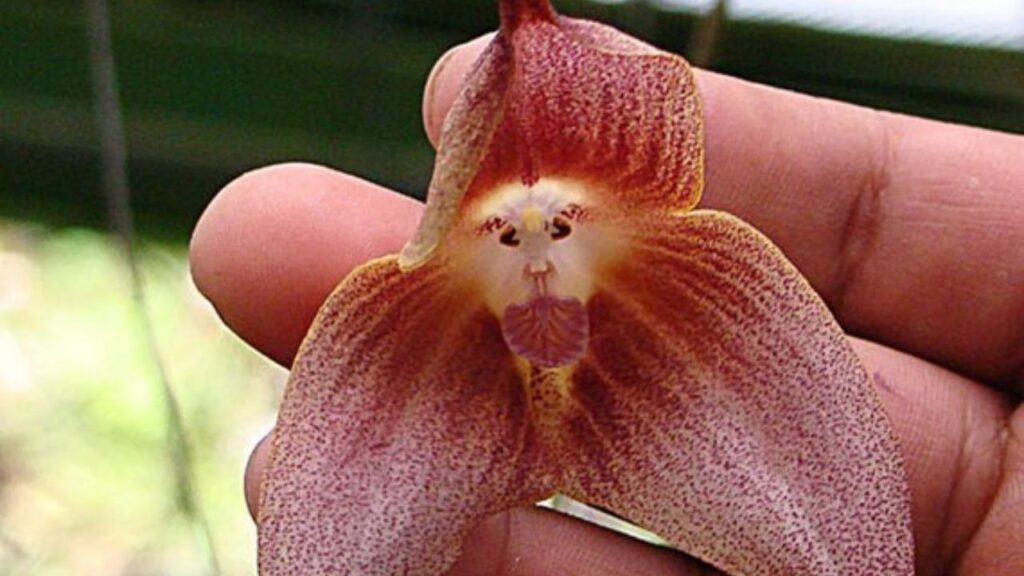
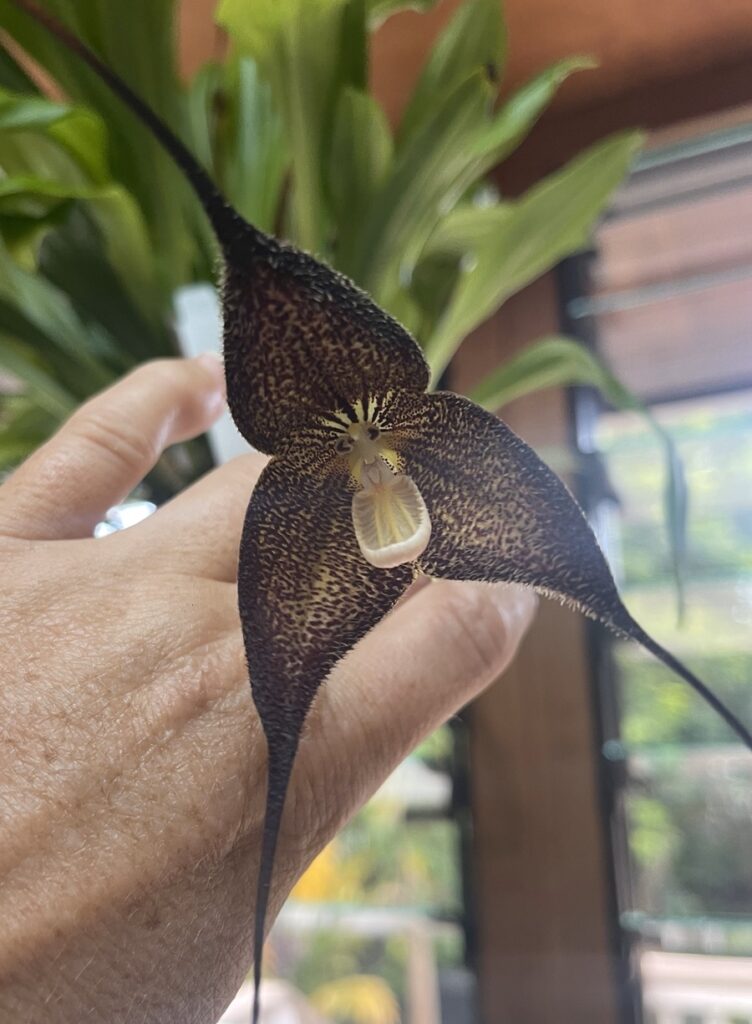
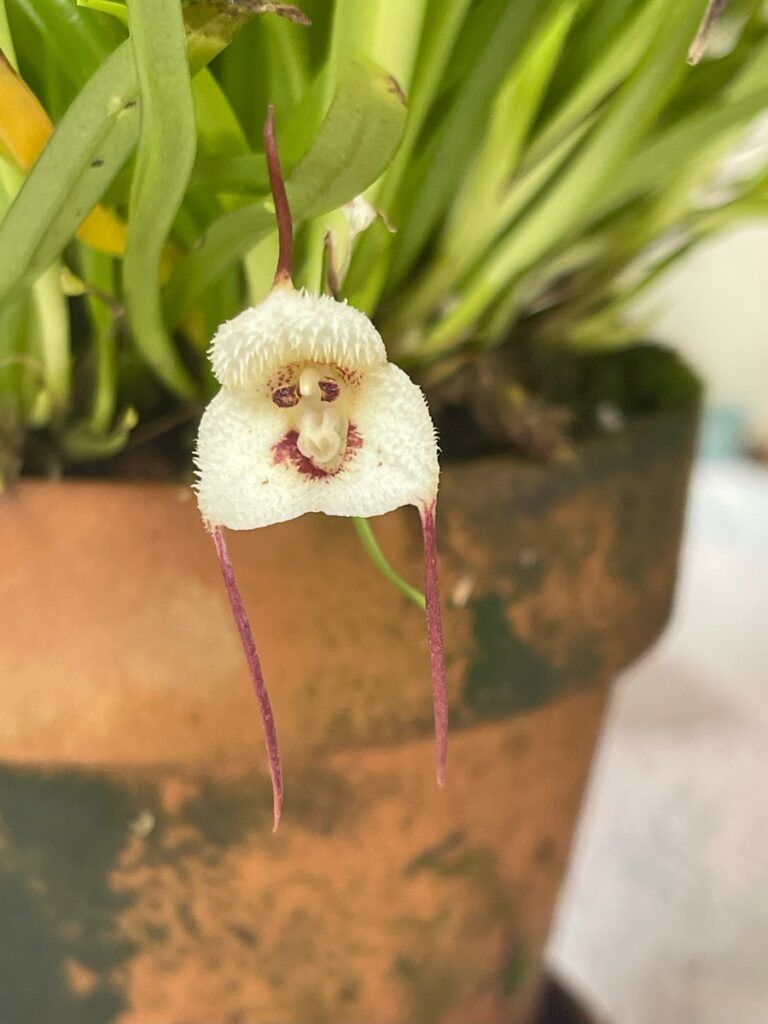
2. Monkey Orchid (Dracula simia)
Native to: Cloud forests of Ecuador and Peru
Why It’s Unique: Its blooms strikingly resemble a monkey’s face, complete with eyes, nose, and mouth.
Habitat: High-altitude, cool, and moist environments
Growing Tip: Needs high humidity, excellent drainage, and cool temperatures.
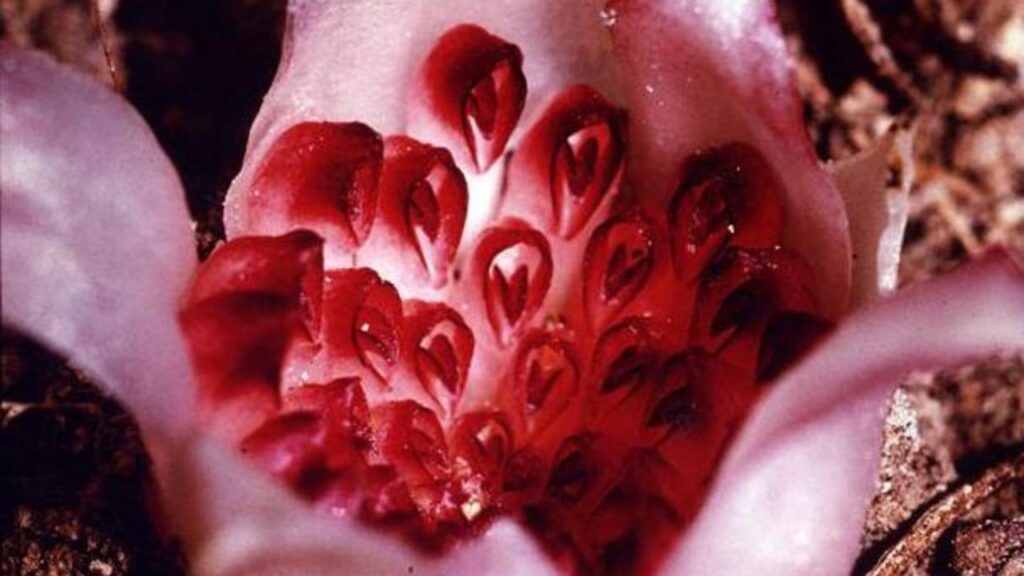
3. Western Underground Orchid (Rhizanthella gardneri)
Native to: Western Australia
Why It’s Unique: Grows entirely underground and never sees sunlight. It relies on a symbiotic relationship with fungi to survive. The first specimen was discovered in 1928 by a farmer while plowing his field.
Conservation Status: Critically endangered, with only a few known locations.
Fun Fact: Flowers are pollinated underground by fungus gnats.
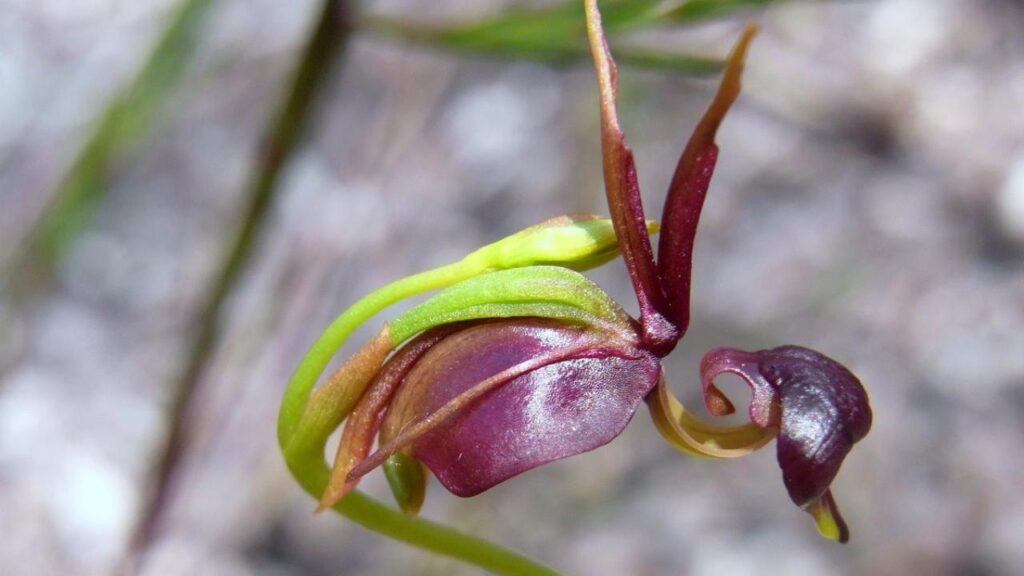
4. Flying Duck Orchid (Caleana major)
Native to: Australia
Why It’s Unique: Its flower mimics the shape of a flying duck to attract pollinating insects.
Habitat: Open forests and meadows
Growing Tip: Cannot be cultivated commercially due to specific symbiotic fungal needs.
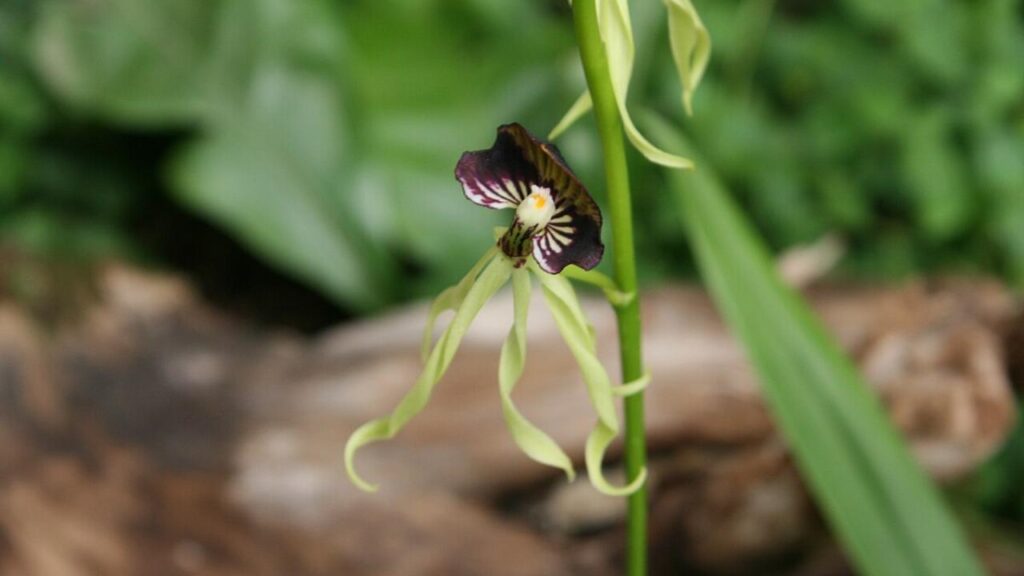
5. Black Orchid (Prosthechea cochleata)
Native to: Central America, particularly Belize (its national flower)
Why It’s Unique: Dark purple to nearly black lip and an upside-down flower structure
Resilience: One of the few orchids that can flower year-round
Growing Tip: Easier to cultivate than many rare orchids; needs warmth and filtered light.
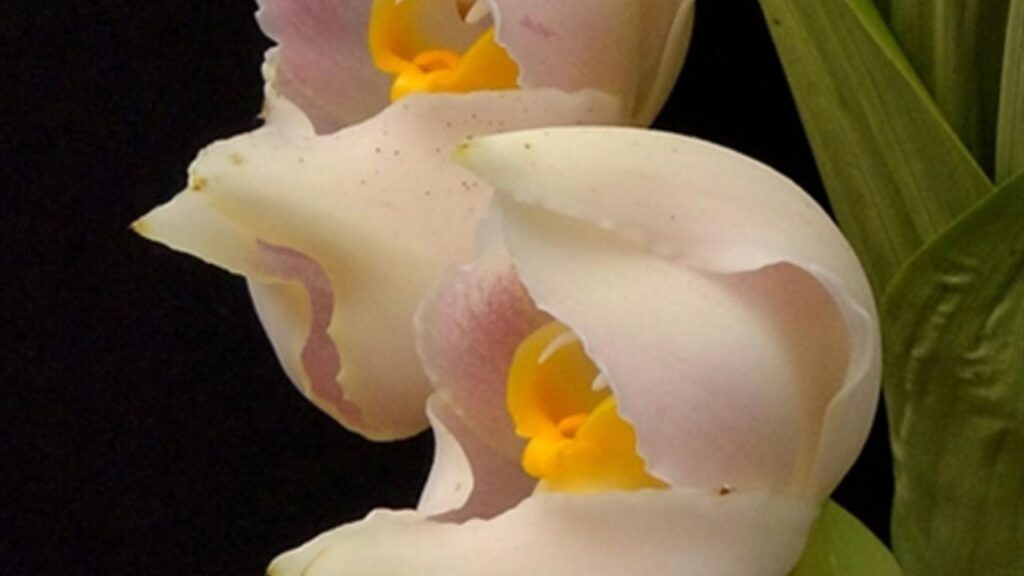
6. Swaddled Babies Orchid (Anguloa uniflora)
Native to: The Andes of South America
Why It’s Unique: The flowers resemble tiny, swaddled infants nestled inside their sepals.
Growing Tip: Requires cool to intermediate temperatures, shade, and consistent moisture
Fun Fact: Blooming often occurs in spring and produces a sweet cinnamon-like scent.
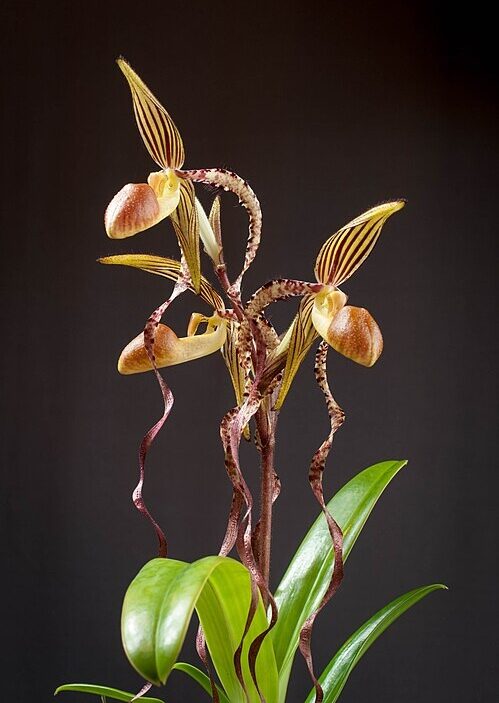
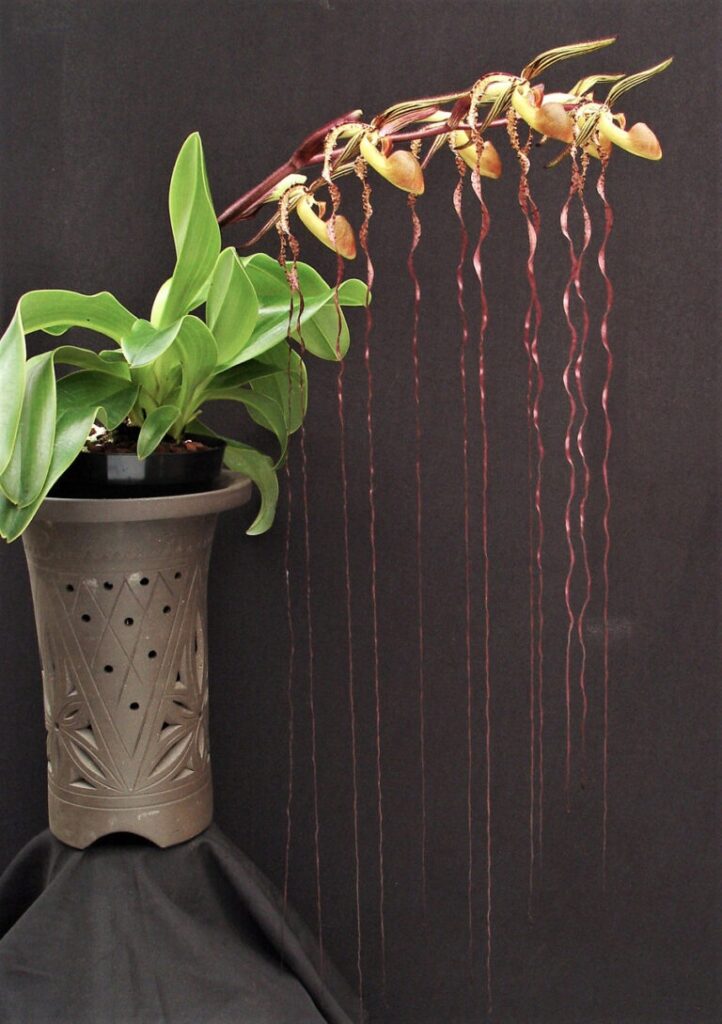
7. Paphiopedilum Sanderianum
Native to: Borneo (Sarawak)
Why It’s Unique: Known for having the longest petals of any orchid—sometimes over 3 feet long—this stunning Paphiopedilum species has an elegant slipper-like pouch and gracefully twisting ribbons.
Conservation Status: Critically endangered due to habitat destruction and over-collection.
Growing Tip: Thrives in warm, humid conditions with good air circulation and consistent moisture.
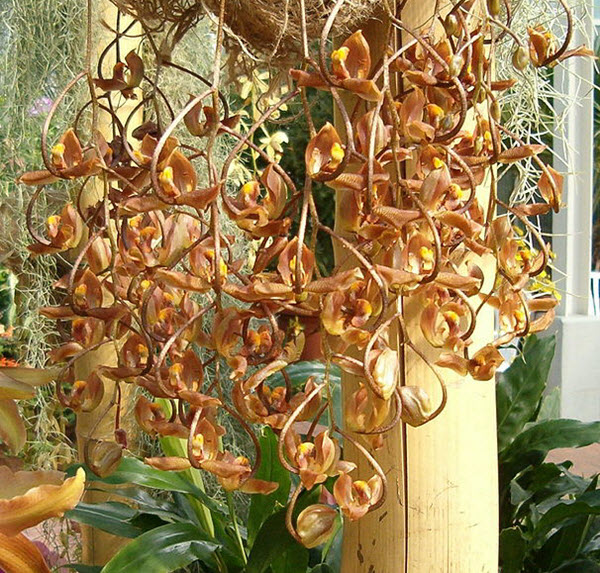
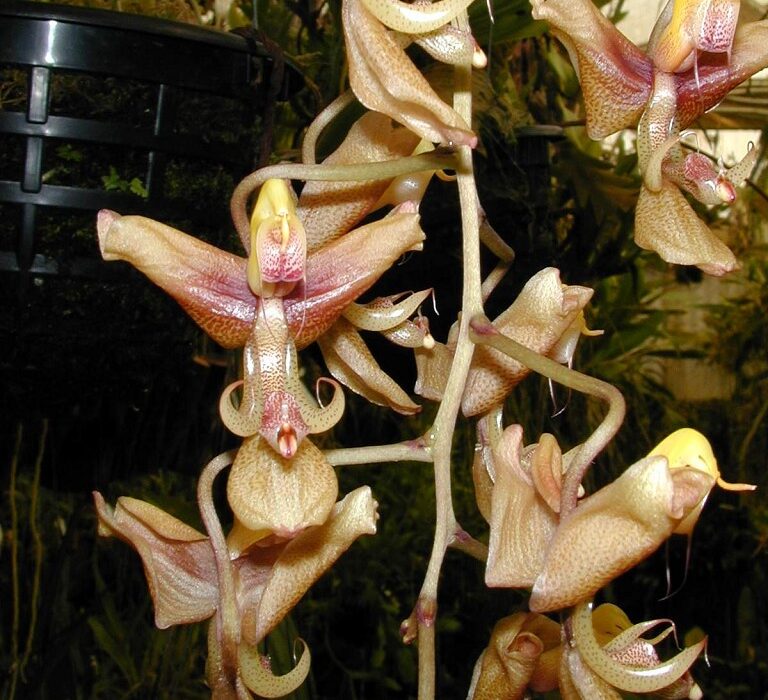
8. Gongora Orchid (Gongora spp.)
Native to: Central and South America
Why It’s Unique: Known for its dangling, fragrant flowers that emit a spicy, cinnamon-like scent and unique pollination mechanism involving euglossine bees
Growing Tip: Likes hanging baskets, high humidity, and good airflow; water generously during growing season
Orchid Adaptations: Nature’s Botanical Geniuses
Orchids have evolved some of the most specialized and bizarre adaptations in the plant kingdom:
Pollination Tricks: Orchids may mimic the scent of female insects, create trap-door mechanisms, or visually resemble animals.
Symbiotic Relationships: Many orchids rely on specific fungi to germinate and grow.
Camouflage & Deception: Some blend into their surroundings to avoid herbivores or trick pollinators.
Aerial Roots: Epiphytic orchids absorb moisture and nutrients from the air using thick, spongy roots.
These adaptations often make orchids particularly sensitive to environmental changes, which is why so many rare species are endangered.
Where to See Rare Orchids in the Wild
For those who love a real-life plant adventure, here are some famous orchid destinations:
Ecuador & Peru: Cloud forests filled with Dracula, Masdevallia, and other cool-growing species.
Borneo: Home to the giant tiger orchid and other tropical epiphytes.
Thailand & Myanmar: Rich in Vandas, Dendrobiums, and Coelogynes.
Hawaii: Several endemic species, like Anoectochilus sandvicensis (Hawaii jewel orchid), grow in native forests.
Florida Everglades: A refuge for the elusive ghost orchid.
Australia: Unique genera like Thelymitra, Diuris, and the flying duck orchid thrive in coastal and inland regions.
Growing Rare Orchids at Home
Rare orchids are not always easy to grow, but some collectors succeed with the right setup. Here are a few tips:
For Indoor Growers:
Use orchid-specific potting mix with bark, perlite, and sphagnum.
Provide bright, filtered light and maintain proper humidity with trays or humidifiers.
Avoid overwatering—let roots dry slightly between waterings.
Use fans to increase airflow around plants.
For Outdoor Growers (like in Hawaii):
Protect orchids from heavy rain and direct afternoon sun.
Mount epiphytic species on trees or cork bark for natural growth.
Ensure excellent drainage and airflow in humid climates.
Watch for pests like snails, slugs, scale, and thrips.
Conservation and Ethical Collection
Many rare orchids are endangered due to over-collection and habitat destruction. Always buy from reputable nurseries or growers who propagate their stock legally and sustainably.
Avoid wild harvesting—not only is it illegal in many places, but it also contributes to the loss of already fragile species. Support botanical gardens and conservation organizations working to preserve rare orchids and their habitats.
Final Thoughts
Rare and unusual orchids are living testaments to the creativity and resilience of nature. From the ghost orchid’s floating blooms to the underground mystery of Rhizanthella, these plants inspire awe and curiosity in all who encounter them.
Whether you’re a seasoned orchid collector or just starting your journey, learning about these incredible species opens up a deeper appreciation for the plant kingdom. With their intricate adaptations, stunning forms, and ecological importance, rare orchids remind us just how diverse and precious life on Earth truly is.
So, keep your eyes open and your mind curious—you never know what wild orchid wonder you might discover next.
Want more gardening inspiration? Join the Adventures in Botany Community and connect with fellow plant lovers! Follow us on, Instagram, TikTok, and YouTube for more gardening tips, DIY projects, and nature-inspired content.